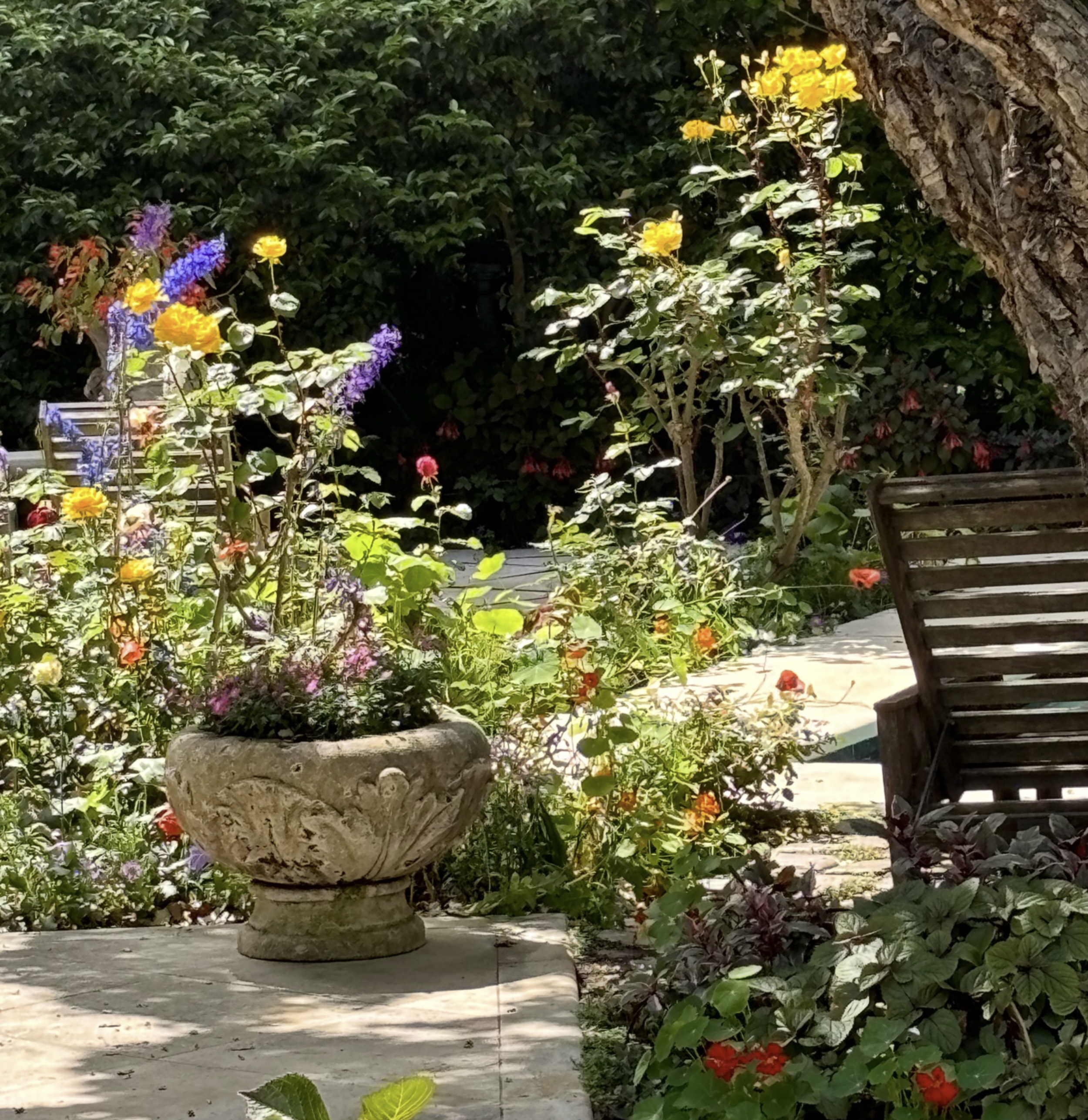
How I walk into a Garden with a New Vision
I do not see a garden as a collection of plants. I see composition. I see rhythm. I see silence and movement. I see the conversation between structure and softness. And most importantly — I see what could be there.
It Is Not Just Something to Buy At a Nursery
Many approach a garden the way they approach a market. They select what they like — a hydrangea here, a rose there, perhaps a dramatic tree because it caught their eye. But a garden is not a series of attractive objects. It is an orchestration.
When I design a landscape, I am not simply choosing plants. I am arranging form, texture, proportion, and negative space. Every plant plays a role. Every pathway directs the eye. Every structure anchors the space. A garden must feel inevitable — as though it could not have been arranged any other way. That is composition.
Harmony Before Horticulture
Yes, plants must thrive. Soil, light, irrigation — these are essential. But harmony precedes horticulture. I begin with the the roots:
The architectural lines of the home
The natural grade of the land
Existing trees and mature plantings
The way light travels across the property throughout the day
From there, I build a relationship between structure and growth. A strong hedge becomes a visual pause. A curved path softens rigid architecture. Composition, Harmony, and the Art of Seeing: How I Approach a Garden
Seeing What Isn’t There Yet
One of the greatest differences between an experienced designer and someone selecting plants from a nursery is vision.
I see the garden in five years.
I see how the oak will cast shadow in late afternoon.
I see how the lavender will spill onto the stone.
I see how the space will feel when someone walks through it at dusk.
Without vision, gardens often become crowded, disjointed, or overly busy. Plants compete instead of converse. Focal points multiply until nothing feels intentional. With vision, restraint becomes powerful. Often, what I choose not to include is just as important as what I plant.
Rhythm, Repetition, & Movement
A well-composed garden has rhythm. Repetition of form creates calm. Variation creates intrigue. Layering creates depth. When done correctly, the eye moves effortlessly through the space. There is no abrupt stop. No confusion. Instead, there is discovery. The garden unfolds.
Timelessness Over Trend
Trends come and go. Gardens endure. My approach is rooted in proportion, structure, and long-term growth. I design landscapes that mature gracefully — that improve with time rather than unravel. A garden should not look fashionable. It should look inevitable.
The Emotional Experience
Ultimately, a garden is not about plants. It is about how a space makes you feel Protected. Inspired. Calm. Grounded. When composition and harmony are honored, a garden becomes more than landscaping. It becomes a living work of art.